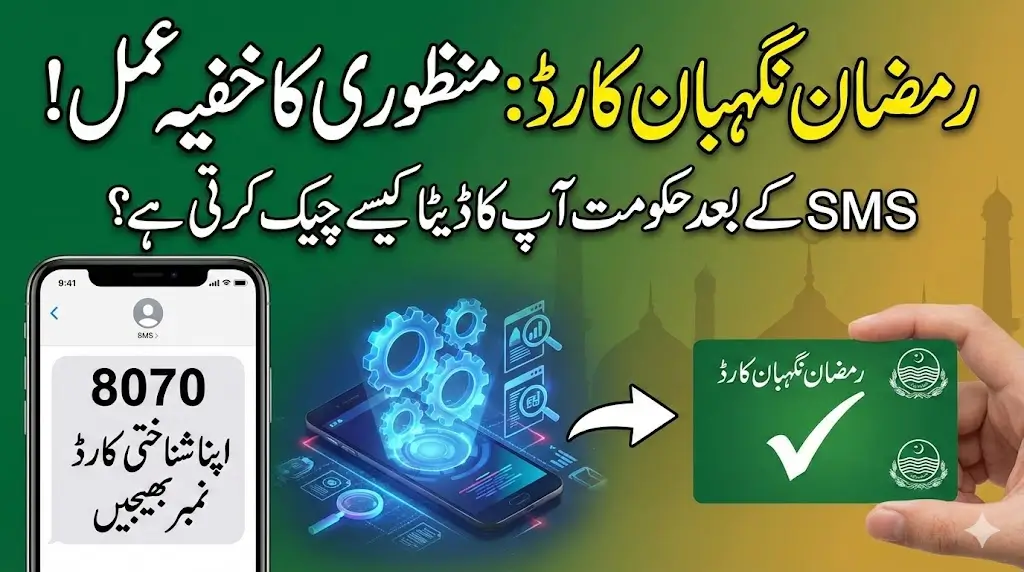
Ramadan Nigehban Card Verification
The Ramadan Nigehban Card Verification is designed to support low-income families across Punjab during the holy month of Ramadan. While registration through SMS or the PSER portal is simple, many people want to know what happens after they submit their details. This is where the verification loop comes in a structured process that ensures financial aid reaches only deserving households.
Understanding how this verification system works can help applicants avoid mistakes, reduce delays, and improve their chances of approval.
What Is the Ramadan Nigehban Card Verification Loop?
The verification loop is the step-by-step process used by the Punjab Government to review, cross-check, and approve applicant data before issuing a Ramadan Nigehban Card.
Instead of relying on a single data source, the system reviews information from multiple angles to ensure fairness, transparency, and accuracy. This approach helps prevent duplication, incorrect approvals, and misuse of public funds.
Step-by-Step Guide to Maryam Nawaz Ration Card Activation Online 2026
Ramadan Nigehban Card Verification Loop – Key Overview
| Verification Stage | What Happens at This Stage |
|---|---|
| CNIC Submission | Applicant sends 13-digit CNIC via 8070 or updates data on the PSER portal |
| Initial Screening | CNIC validity, Punjab residency, and duplicate entries are checked |
| Household Data Review | Family size, address, and survey records are cross-checked |
| Income Assessment | Monthly household income is reviewed against the PKR 45,000 limit |
| Government Aid Check | Existing assistance programs are reviewed under policy rules |
| Field Survey Validation | On-ground teams verify household and living conditions (where required) |
| Data Matching | Applicant data is compared with official government databases |
| Error & Mismatch Handling | Inconsistent or incomplete records are flagged for review |
| Final Approval | Eligible households are approved for the Ramadan Nigehban Card |
| Card Allocation | One card is issued per verified household |
| Delay Triggers | Incorrect details, outdated records, or duplicate entries |
| System Goal | Fair, transparent, and need-based distribution of Ramadan relief |
Step 1: CNIC Submission and Initial Screening
The verification process begins when an applicant sends their 13-digit CNIC number to 8070 or updates their information through the PSER portal.
At this stage:
- The system checks whether the CNIC is valid and active
- It confirms that the applicant is a resident of Punjab
- Duplicate or incomplete entries are automatically flagged
If basic requirements are not met, the application may be paused or rejected early.
Step 2: Household Data Cross-Checking
Once the CNIC passes initial screening, the applicant’s household data enters the core verification loop.
This includes:
- Monthly household income
- Family size and dependency details
- Residential address
- Survey records collected by field teams
The system compares this information with existing government databases to confirm consistency. Any mismatch may trigger a review or request for updated information.
Step 3: Income and Assistance Review
A key part of the verification loop is checking whether the household falls within the PKR 45,000 monthly income limit.
Authorities also review:
- Whether the family is already receiving other government assistance
- If the household qualifies under current policy rules
- Whether the family should be prioritized due to financial vulnerability
This step ensures that support is directed toward families with the greatest need during Ramadan.
Step 4: Field Survey Validation
In many cases, field survey teams play a role in verification. These teams collect or confirm household data directly from communities.
Survey validation helps to:
- Confirm living conditions
- Verify family composition
- Reduce the risk of false or misleading information
This human verification layer strengthens the accuracy of the overall system.
Step 5: Final Approval and Card Allocation
After all checks are completed, eligible applications move to final approval.
At this point:
- One card is approved per eligible household
- Approved families are added to the distribution list
- Local authorities prepare for card delivery or collection
Applicants who pass this stage are officially included in the Ramadan Nigehban Card program.
Wazir Azam Ramazan Relief Package: Who Can Get It and How to Apply
Why Accurate Information Matters
Providing correct and truthful information is essential. Even small errors such as an incorrect address or mobile number can delay approval or result in disqualification.
The verification loop is designed to be fair, but it depends heavily on the accuracy of applicant data. Families are strongly advised to update outdated information through the PSER portal if needed.
Common Reasons Applications Face Delays
Some applications take longer due to:
- Incomplete or outdated household records
- Income details that require further confirmation
- Duplicate entries within the same household
- Data mismatches between surveys and official records
These delays do not always mean rejection; many cases are resolved after additional review.
Transparency and Fairness in the System
The Ramadan Nigehban Card verification loop reflects the Punjab Government’s commitment to transparent welfare distribution. By combining digital checks with field verification, the system minimizes errors and ensures equal treatment for all applicants.
This structured process helps build public trust and ensures that Ramadan assistance reaches families who truly depend on it.
Wazir Azam Ramzan Package 2026 – Complete Guide to Apply Online
Final Thoughts
The Ramadan Nigehban Card verification loop is more than a technical process. It is the backbone of a fair and effective relief program. From CNIC submission to final approval, every step is designed to protect deserving families and ensure responsible use of public funds.
Applicants who understand this process and provide accurate information are far more likely to experience smooth approval and timely support during Ramadan.